Africa Medical and Behavioral Sciences Organization

AMBSO proudly presented its research at the National Annual Communicable and Non-Communicable Diseases (NACNDC) & 19th Joint Annual Scientific Health (JASH) Conference held from 5th–7th November 2025 at Speke Resort Munyonyo. The conference was convened under the theme “Unified Action Against Communicable and Non-Communicable Diseases,” bringing together researchers, policymakers, and health practitioners to address pressing health challenges.
Advancing Knowledge on Tuberculosis at Community Level
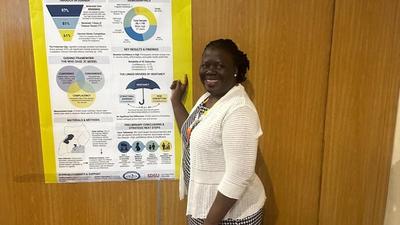
During the conference, AMBSO presented a study titled “Presumptive Tuberculosis Symptoms at the Community Level and Associated Health-Seeking Practices in Wakiso and Hoima Districts, Uganda.” The findings revealed a notable burden of TB-related symptoms within communities.
Out of 4,217 individuals analyzed, 10.6% reported at least one presumptive TB symptom, with the majority (69%) being male. Among those with symptoms, 9.6% were living with HIV. However, health-seeking behavior remained low, with only 3.1% of symptomatic individuals seeking medical attention.
The study further highlighted key factors influencing care-seeking behavior. People living with HIV were more likely to seek care, as were females, individuals with lower levels of education, and those aged 30 years and above. Despite this, the overall uptake of health services remains below optimal levels, pointing to critical gaps in community response to TB symptoms.
Exploring Barriers to Cervical Cancer Screening
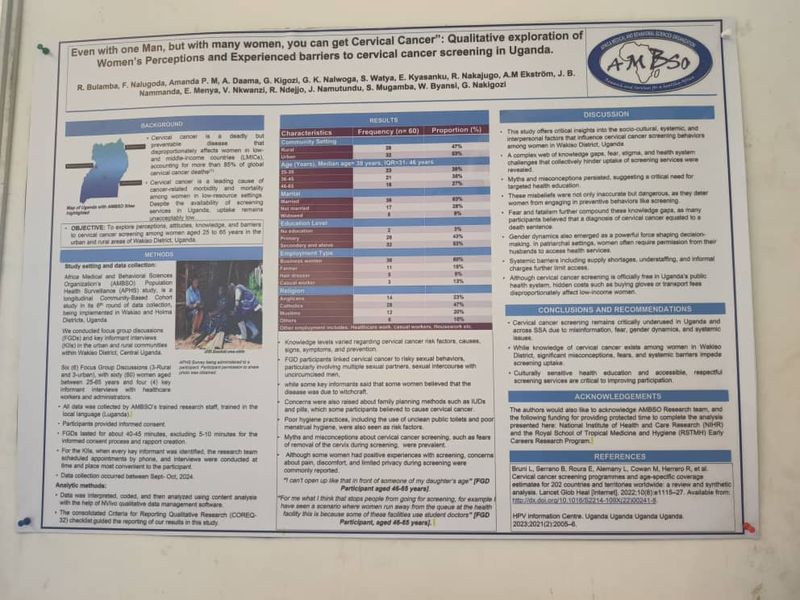
AMBSO also presented a qualitative study titled “Even with one Man, but with many women, you can get Cervical Cancer”: Women’s Perceptions and Experienced Barriers to Cervical Cancer Screening in Uganda. This research explored community perceptions, beliefs, and challenges surrounding cervical cancer screening.
Findings revealed varying levels of knowledge about cervical cancer, including its causes, symptoms, and prevention. While some participants correctly associated the disease with risky sexual behaviors, others attributed it to misconceptions such as witchcraft or certain family planning methods.
The study identified several barriers to screening, including fear of pain, concerns about privacy, cultural beliefs, and misinformation. Myths such as fears of cervix removal were also prevalent. Additionally, poor hygiene practices and gender dynamics were perceived as contributing factors.
Despite some positive experiences reported by participants, cervical cancer screening remains significantly underutilized in Uganda and across Sub-Saharan Africa. The findings emphasize the need for culturally sensitive health education, improved community awareness, and the provision of accessible and respectful screening services.
Strengthening Evidence for Better Health Outcomes
AMBSO’s participation in the conference underscores its commitment to generating evidence that informs public health interventions and policy. The research presented highlights critical gaps in health-seeking behavior and preventive care, while also offering actionable insights to improve service delivery and community engagement.
As AMBSO continues to contribute to national and regional health discourse, it remains dedicated to advancing research that supports better health outcomes for communities across Uganda and beyond.